

Skin that looks quiet, steady, and predictable feels like good luck to many people, yet dermatology treats it as an achievable outcome. Not magic, not a miracle product, and not a sixty-step ritual.
Just a steady mix of barrier stability, low day-to-day inflammation, and routine choices that actually match what your skin does in the real world. Oil, dryness, redness, clogged pores, reactivity, or any blend of those.
A calm and balanced complexion can be measured clinically. Fewer stinging episodes, fewer flare days, less visible redness, more even texture, and fewer cycles of over-stripping followed by rebound oil. That framework matters because a massive portion of the population reports some degree of sensitive skin.
Surveys point to roughly 60 to 70 percent of women and 50 to 60 percent of men describing their skin as sensitive in one way or another. With numbers that high, a steady complexion is not a niche concern. It is a universal skin goal.
Here’s a practical, dermatology-driven playbook. Ingredient logic, routines that can actually run for weeks without drama, and decision points for moments when home care should shift into clinical care.
What Calm and Balanced Means in Clinical Practice

A balanced complexion is not an aesthetic slogan. It is a reflection of several skin functions performing fairly well.
Lower Barrier Stress
When the outer layer holds moisture efficiently, tiny cracks are reduced, and tightness is less frequent. Water loss drops. Flaking softens. A stable barrier gives skin room to recover from daily stressors.
Lower Visible Inflammation
Red blotches, patches that flare after a cleanser, and small papules that erupt without warning all fall under inflammation. Calmer skin usually shows fewer of these patterns over time.
Lower Irritant Exposure
Fragrance, essential oils, harsh surfactants, aggressive acids, and several active ingredients piled on top of each other create a long list of irritant possibilities. Sensitive skin rarely enjoys that type of stimulation.
More Consistent UV Protection
UV amplifies inflammation. It worsens flushing, pigment issues, and long-term texture changes. Consistent SPF is a foundational part of any dermatology plan for calmer skin.
Even Oily Skin Can Be Barrier Stressed
People often forget that oil production and barrier stability are not opposites. Over-cleansing or heavy exfoliation can erode protective lipids in oily skin.
Once the barrier breaks down, stinging is more likely, dehydration rises, and rebound oil follows. The cycle repeats until cleansing habits shift.
Why Complexions Become Reactive, According to Professional Guidance
View this post on Instagram
Reactivity rarely comes from one villain. Dermatology reviews point to several recurring triggers.
Fragrance and Other Irritants
The American Academy of Dermatology repeatedly highlights fragrance as a top irritant. “Fragrance-free” and “unscented” are not identical.
The second term can still contain masking fragrances. Sensitive-skin patients often learn that lesson the hard way.
Allergic Contact Dermatitis
When every gentle attempt still leads to burning, allergic contact dermatitis moves high on the differential, as per research.
Patch testing is the standard tool to identify allergens. Once the specific trigger is known, the guessing ends.
Rosacea
A global estimate suggests rosacea affects around 5.5 percent of adults. It often presents as flushing, burning, visible vessels, or bumps that resemble acne but behave differently. Routine acne treatments rarely solve it and can sometimes inflame it further.
Acne Driven Inflammation
Acne is one of the most common skin conditions worldwide. Modern guidelines advocate combination therapy. The 2024 JAAD guideline highlights strong evidence for benzoyl peroxide and topical retinoids, with support for fixed-dose combinations rather than scattered spot treatment.
People who deal with recurring inflammatory breakouts often look for structured treatment guidance, and many eventually consult the best dermatologist Singapore for acne to map out a plan that stops the constant cycle of flare and recovery.
The Dermatologist Style Baseline Routine
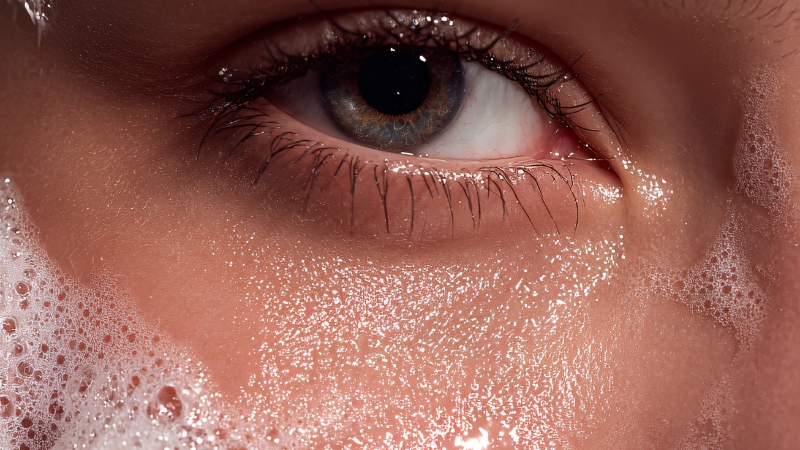
People skip this part. They want the strong serum, the fancy tube, or the trend they saw at 2 a.m. The routine below is the real anchor. A calm complexion usually starts here.
Step One: Cleanse Without Provoking Skin
Cleansing removes sunscreen, makeup, pollution, and excess oil. It is not a reset button.
Practical notes:
- Choose a mild, fragrance-free cleanser if your skin reacts easily
- Use lukewarm water
- Pat dry gently, no towel scrubbing
Step Two: Moisturize to Stabilize the Barrier
Barrier strength depends heavily on lipids. Ceramides form a significant part of the skin barrier and support its structure. Cleveland Clinic notes their central role in barrier function. Clinical work in atopic dermatitis management also supports ceramide-containing moisturizers.
Low-dose urea between 2 and 10 percent improves moisturization and helps refine barrier quality, according to dermatology reviews.
The rule dermatologists repeat during consults: a basic moisturizer that never stings is far more valuable than an “active” formula you brace yourself to use.
Step Three: Sunscreen Every Time Daylight Appears
UV worsens redness and uneven tone. The AAD recommends SPF 30 or higher, explaining that SPF 30 blocks about 97 percent of UVB rays.
If your skin reacts easily, sunscreen often becomes the anchor product. Dermatologists build the rest of a routine around whichever SPF your skin tolerates with zero drama.
Ingredient Logic for Calm and Balanced Skin
Many ingredients support stability. Others tend to create chaos. Here is the map professionals use.
Ingredients That Often Support Calmness
Niacinamide
Niacinamide, a form of vitamin B3, shows clinical support for improving red blotchiness and enhancing barrier performance. Cosmetic science literature highlights reductions in uneven color with consistent use.
Practical Guidance
Start with a low concentration. Apply once daily. If flushing or stinging occurs, pause and reassess. Sometimes the formula or preservatives cause the reaction rather than niacinamide itself.
Azelaic Acid
Azelaic acid is a workhorse for redness-prone patterns and papulopustular rosacea. The AAD lists it among standard rosacea treatments. It supports both acne-like bumps and long-lasting discoloration.
Many dermatologists recommend it as the first active for reactive skin, provided the person tolerates it.
Benzoyl Peroxide
Benzoyl peroxide holds strong recommendations from acne guidelines due to its antimicrobial and anti-inflammatory effects. Rosacea skin can be sensitive to it.
The National Rosacea Society highlights encapsulated prescription formulations designed to reduce irritation for sensitive patients.
Things That Commonly Destabilize Calm Skin Goals
- Fragrance and essential oils
- High frequency exfoliation, such as strong AHAs, scrubs, and cleansing brushes
- Layered actives without a plan
- Rapid routine changes that make triggers impossible to identify
When the Real Issue Is Rosacea
@cammie.scott i feel like i need 20 parts to this but tried to keep it short and sweet! please let me know if you have q’s!!! #skincare #skincareroutine #rosacea #sensitiveskin #clearskin #simpleskincare #skintransformation @rhode skin @First Aid Beauty @Clarins USA @Alpyn Beauty #greenscreen ♬ original sound – Camden Scott
Rosacea often hides in plain sight. People call it sensitive skin or stubborn redness for years. Patterns such as flushing, burning, visible blood vessels, and acne-like bumps that resist routine acne care usually signal rosacea.
Professional Approach
Strip the routine down. Cleanser. Moisturizer. Sunscreen. Nothing else for a short period.
Add a single treatment afterward, often azelaic acid, and hold steady for several weeks. Track triggers.
Heat, hot drinks, alcohol, intense exercise, and spicy foods show up frequently in patient histories, although each person has unique patterns.
Device-based treatments such as laser or light therapies are used in dermatology offices, although those choices depend on individual evaluation.
When the Real Issue Is Allergic Contact Dermatitis
Patterns like “everything burns,” or chronic flares in the same zones often point to allergic contact dermatitis.
Professional Standard
Patch testing. It is the only reliable way to identify allergens.
What Changes After Patch Testing
You finally stop guessing. Instead of trying every product with a sensitive label, you avoid a specific allergen group entirely.
Fragrance mix, certain preservatives, specific surfactants, or other chemical families often show up in dermatology reports.
Routines for Three Common Profiles

Below are steady routines built around real dermatology logic. They are simple on purpose.
Profile A: Redness Prone, Easily Flushed, Random Stinging
Morning
- Gentle fragrance-free cleanse or just rinse
- Moisturizer with ceramides
- Broad spectrum SPF 30 or higher
Night
- Gentle cleanser
- Moisturizer
- Optional azelaic acid if tolerated
Profile B: Oily Skin, Clogged Pores, Inflammatory Breakouts
Morning
- Gentle cleanse
- Lightweight, non-comedogenic moisturizer
- SPF 30 or higher
Night
- Cleanse
- Topical retinoid at low frequency while starting out
- Benzoyl peroxide or a guideline-supported combination if tolerated
Profile C: Dry, Tight, Flaky Skin, Makeup Sits Poorly
Morning
- Gentle cleanse or rinse
- Rich moisturizer containing ceramides or low dose urea
- SPF 30 or higher
Night
- Gentle cleanser
- Moisturizer on slightly damp skin
- Occlusive layer on very dry areas if tolerated
Quick Reference Table
| Main Issue | First Professional Move | Commonly Used Topicals | When to Escalate |
| Persistent redness or flushing | Assume rosacea pattern, simplify routine | Azelaic acid, gentle care | Eye symptoms, worsening burning, no progress after several weeks |
| “Sensitive to everything” pattern | Consider contact allergy, patch testing | Allergen avoidance based on results | Recurrent eyelid or neck rash, chronic relapses |
| Acne with inflammation | Use guideline combination approach | Benzoyl peroxide, topical retinoids, combinations | Scarring, nodules, significant psychosocial burden |
| Dryness, tightness, flaking | Rebuild barrier | Ceramide moisturizers, low dose urea | Cracking, bleeding, suspected eczema |
When Home Care Should Shift Into Clinical Care
A calm complexion can be built at home, yet there are clear indicators for professional care.
- Rosacea patterns that do not respond to gentle routines
- Painful acne, scarring, or nodules
- Recurring eyelid or neck dermatitis
- Severe dryness with fissures or bleeding
- Burning that persists even after removing active products
A dermatologist can evaluate for rosacea, eczema, seborrheic dermatitis, contact allergies, perioral dermatitis, or other conditions that mimic simple sensitivity.
Prescription options, patch testing, and targeted procedures can all become part of a personalized plan.
Building a Routine That Stays Boring in the Best Way
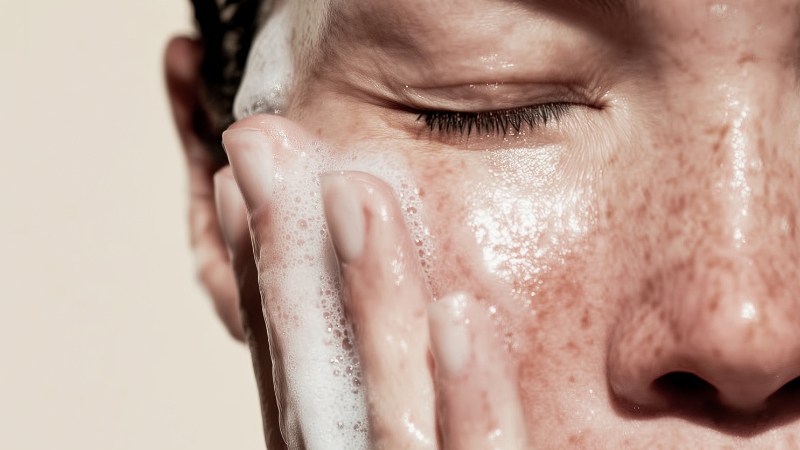
Calm skin often comes from habits that feel unremarkable. Mild cleanser. Barrier-focused moisturizer. Sun protection. One or two well-chosen actives. Slow introductions.
Long pauses between changes. Many people reach for new products at every flare. Dermatologists usually do the opposite. They subtract first, then add with precision.
Consistency beats intensity most of the time. The skin barrier prefers small shifts, not experiments that swing from acids to scrubs to retinoids in a single week.
Patch testing ends years of uncertainty for people with hidden allergies. Rosacea recognition helps people stop fighting redness with exfoliation that only worsens it. Acne improves with structured combinations rather than random trial and error.
Final Thoughts
Calm and balanced skin is not a personality trait. It is a set of behaviors your skin repeats when it has a stable barrier, a predictable routine, and minimal irritant exposure.
Once those pieces fall into place, the entire complexion changes tempo. Redness softens. Breakouts settle. Sensitivity becomes intermittent rather than constant.
The professional approach is surprisingly simple. Fewer surprises. Fewer actives at once. More patience. More barrier support. Clear decision points for when expert care should step in.
Your skin can absolutely move toward a calmer rhythm. It just prefers a pace that feels almost boring at first glance. In dermatology, boring often means balanced.