
Beauty and personal care careers continue to expand in 2026 as self-care habits increase, med-spas open at a rapid pace, and consumers seek professional services focused on wellness and appearance. Demand for trained professionals remains strong across skincare, hair, and cosmetic services.
Two career options attract consistent interest across beauty schools and training programs. Estheticians focus primarily on skincare treatments and results-driven services.
Cosmetologists receive broader training that includes hair, nails, makeup, and basic skincare.
Income potential varies between both paths based on training length, specialization, work environment, and long-term career goals. Salary trends, job growth, and flexibility help determine which profession delivers higher earnings in today’s market.
Salary Comparison in 2026
| Feature | Esthetician | Cosmetologist |
|---|---|---|
| Training Time | 600–750 hrs (shorter) | 1,000–1,600 hrs (longer) |
| Average Salary | $46K–$53K | $50K–$60K (up to $80K full-time adjusted) |
| Top Earner Potential | $60K+ (med-spas) | $75K+ (salon ownership, specialization) |
| Services Offered | Skincare only | Hair, nails, skin, makeup |
| Work Settings | Calm, wellness-focused | Fast-paced, social |
| Startup Cost | Lower | Higher (longer school, equipment) |
| Flexibility | High (freelance, spa suites) | High (full-service, freelance, events) |
Income potential differs based on specialization, experience level, and work setting. Training investment and service range strongly influence earning growth over time.
Esthetician Salaries
View this post on Instagram
Average annual income for estheticians ranges between $46,000 and $53,252. Entry-level professionals typically earn $30,000 to $45,000.
Higher income levels often appear in medical or advanced skincare settings. Top earners exceed $60,000 per year, especially in med-spas or high-end clinical environments.
Employment demand remains strong, with projected job growth of 9 percent through 2032, exceeding average occupational growth rates.
Earnings vary significantly due to specialization and work structure.
- Advanced treatment certifications including chemical peels and laser services
- Medical esthetician roles requiring additional education
- Geographic location, client demographics, and tipping practices
- Full-time compared to part-time scheduling
Cosmetologist Salaries
@beautybycasshtx How much I make in a busy day as a cosmetologist 😚 #cosmetologist #lashtech #houstonlashtech #nailtech #houstonnailtech #houstongelx #houstonlashextensions #browtech #houstonbrowtech #howmuchimakeinaday #dayinmylife @sunkissedbycass @sunkissedbycass @sunkissedbycass ♬ Rich Flex Carter Walsh Remix – CarterWalsh
Average annual income for cosmetologists falls between $50,000 and $60,000. An adjusted full-time earning estimate of $79,807 per year based on a 40-hour workweek.
Entry-level earnings generally range between $35,000 and $50,000.
Top professionals earn $75,000 or more, particularly through salon ownership, advanced specialization, or high-end clientele.
Projected job growth reaches 8 percent through 2032.
- Variety of services offered
- Client retention and referral rates
- Freelance success or salon ownership
- Demand for advanced hair services such as balayage and color correction
Which Career Pays More
Early-career professionals in cosmetology often earn higher income due to broader service offerings and consistent tipping opportunities.
Mid-career and advanced estheticians often close the income gap by entering med-spas, offering advanced treatments, or working in clinical environments. Medical estheticians and dual-licensed professionals often command premium rates.
Dual licensing combines multiple income streams through hair, nails, and advanced skincare services, creating the highest earning ceiling among beauty careers in 2026.
View this post on Instagram
Training Requirements and Licensing
Education and licensing play a major role in determining career entry speed, service scope, and long-term earning potential within beauty professions.
Training hours, curriculum depth, and state licensing standards differ significantly between esthetics and cosmetology, shaping daily responsibilities and career flexibility.
Esthetician
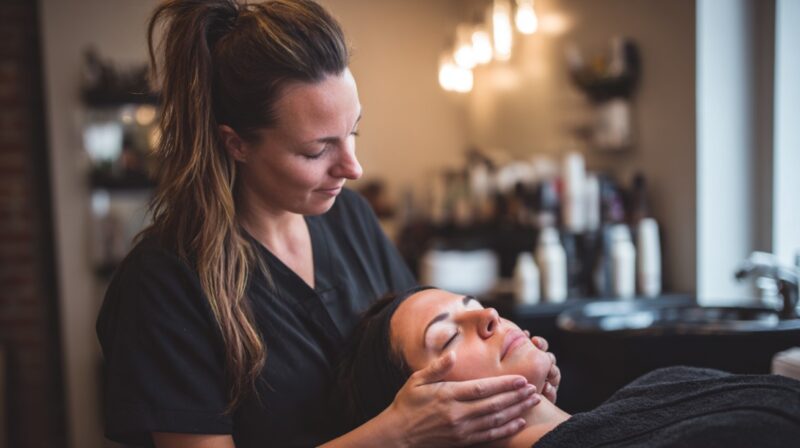
Training programs for estheticians require fewer hours compared to cosmetology programs, allowing faster entry into the workforce.
Required training ranges between 600 and 750 hours, depending on state regulations. California mandates 600 hours, according to Five Star. Program completion typically takes 6 to 9 months.
- Skin analysis and consultation
- Facials and facial massage
- Hair removal services such as waxing, threading, and laser treatments with certification
- Microdermabrasion and chemical peels
- Makeup application
- Lash and brow tinting and extensions
Licensing requires passing state board examinations, such as the California State Board Written Exam.
Cosmetologist
Cosmetology programs involve more extensive training due to the wide range of services covered. Required hours range between 1,000 and 1,600 hours. California requires 1,000 hours.
Program duration usually spans 12 to 24 months when completed full-time, as reported by Milady.
- Hair cutting, coloring, perming, and styling
- Nail care services, including manicures and pedicures
- Makeup application and basic skincare
- Sanitation procedures, health, and safety standards
- Business practices and client management
Licensing includes both written and practical exams in most states.
Dual Licensing Option
Dual licensing combines esthetician and cosmetologist credentials, increasing service offerings and income potential.
Adding esthetics to cosmetology may require approximately 200 additional hours.
- Expanded service menus
- Greater scheduling and career flexibility
- Increased job opportunities
- Higher long-term earning potential
Professionals holding both licenses often qualify for higher-paying roles and freelance opportunities.
Work Environment and Personality Fit

Daily work environments influence job satisfaction, stress levels, and long-term career sustainability. Personality traits, work pace, and client interaction styles often align differently between esthetics and cosmetology.
Esthetics
Estheticians often work in settings focused on relaxation, skin health, and personalized treatment plans.
- Spas and wellness centers
- Dermatology offices and med-spas
- Resorts and cruise ships
- Salon suites and independent skincare studios
Personality traits suited for esthetics include patience, attention to detail, and analytical thinking. Professionals in skincare roles often prefer one-on-one client relationships and results-based treatments such as acne correction or anti-aging services.
Cosmetology
Cosmetologists typically work in social and fast-moving environments that involve creativity and trend awareness.
- Hair salons and barbershops
- Full-service salons and spas
- Event styling for weddings and entertainment
- Freelance services and salon ownership
Personality traits aligned with cosmetology include creativity, strong communication skills, and comfort in dynamic workspaces. Many professionals enjoy staying current with trends and interacting with a wide client base.
Summary
Cosmetology offers a broad service range, higher entry-level income, and long-term financial growth through specialization or salon ownership.
Esthetics provides faster workforce entry, strong growth in skincare demand, and competitive income through medical or advanced treatment roles.
Dual licensing delivers maximum flexibility and earning potential by combining both disciplines. Career satisfaction and income stability depend on aligning personal interests, skills, and professional goals with the path that fits best in 2026 and future years.