
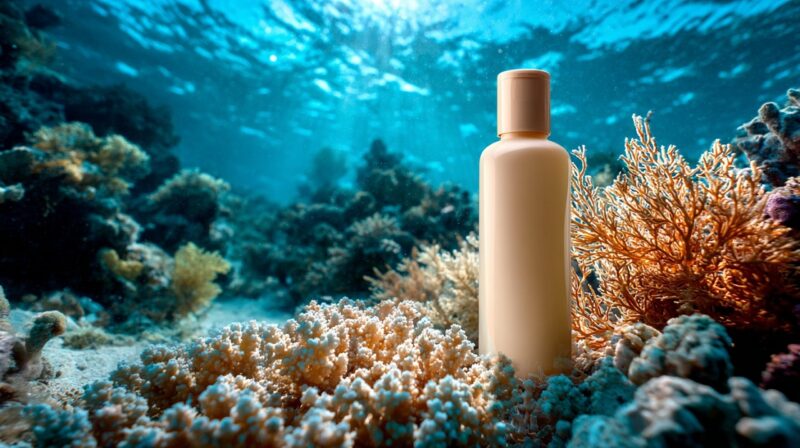
Reef Safe Sunscreen refers to sun protection products made without ingredients linked to coral reef damage or marine toxicity. Coral reef systems support close to 25% of all marine species while occupying less than 1 percent of the ocean surface area.
Growing public concern about coral bleaching, ocean pollution, and wildlife loss has increased demand for reef-conscious skincare choices.
Consumer education plays a critical role because no legally enforced definition or certification standard exists for reef-safe labeling.
Marketing claims often vary, placing responsibility on buyers to evaluate ingredient lists and environmental impact independently.
Coral Reefs and Sunscreen
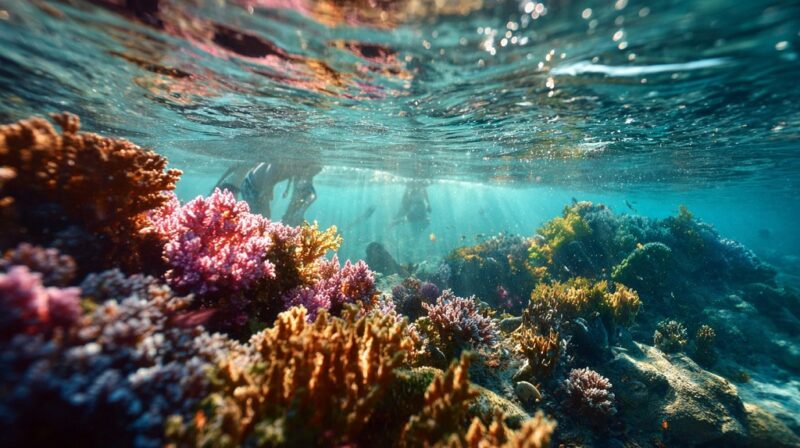
Coral reefs support complex marine systems that regulate coastal health, fisheries, and biodiversity. Increasing ocean temperatures, shoreline development, and chemical pollution continue to accelerate reef decline worldwide.
Human recreational activity adds another layer of stress through sunscreen contamination in coastal waters.
Scientific estimates show a substantial volume of sunscreen entering oceans each year, introduced through common activities connected to tourism and daily hygiene. Key pathways responsible for marine contamination include the following sources of exposure:
- Direct wash-off during swimming and snorkeling
- Wastewater discharge after showering
- Urban and coastal runoff during rainfall
Chemical UV filters used in conventional sun protection products contribute to coral bleaching by damaging coral DNA, disrupting larval development, and interfering with hormone systems in marine organisms.
Reef Safe Sunscreen avoids these filters, reducing chemical stress placed on vulnerable reef ecosystems. Government-led intervention has already demonstrated potential impact, illustrated by Palau’s nationwide ban on sunscreens containing reef-toxic ingredients, reinforcing the role of policy in ocean protection.
What Makes Sunscreen Reef Safe
Reef Safe Sunscreen focuses on ingredient selection and formulation practices designed to limit harm to marine environments. Product safety depends not only on UV protection performance but also on ecological compatibility.
Active UV Filters
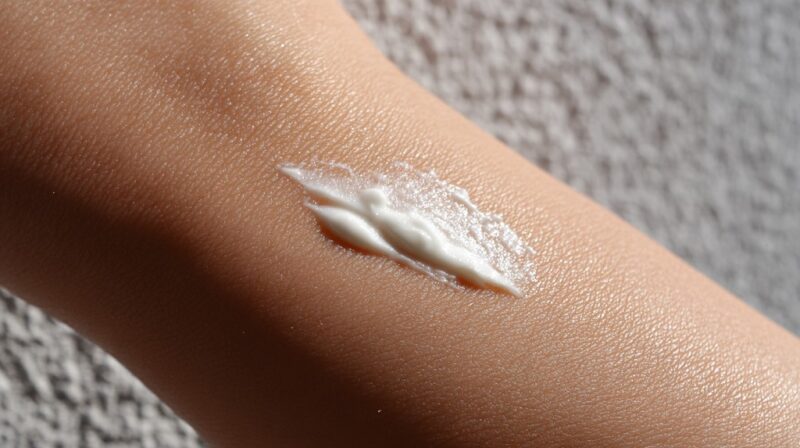
Mineral-based UV filters remain central to reef-conscious sun protection. Reef Safe Sunscreen commonly relies on non-nano zinc oxide and non-nano titanium dioxide due to lower toxicity risks for coral reefs. Mineral particles form a physical barrier on skin surface, reflecting ultraviolet radiation instead of absorbing it chemically.
Particle size plays a critical role in environmental impact. Nano-scale minerals provide improved cosmetic transparency but raise concerns regarding ingestion by marine life.
Research continues to assess long-term ecological behavior of nano particles, prompting many environmentally focused brands to prioritize non-nano minerals despite visible residue challenges.
Key differences guiding formulation decisions include the following characteristics:
- Non-nano minerals reduce potential uptake by marine organisms
- Physical UV reflection limits chemical interaction with water ecosystems
- Increased white cast remains a formulation tradeoff
Ingredients to Avoid
Reef Safe Sunscreen excludes several widely used UV filters and additives linked to coral and marine toxicity. Ingredient scrutiny remains essential due to widespread use of reef-damaging compounds in conventional sunscreens.
Compounds most frequently associated with coral damage include the following substances:
- Oxybenzone and octinoxate linked to coral bleaching and DNA damage
- Octocrylene and homosalate associated with marine toxicity
- Avobenzone subject to ongoing environmental debate
Additional non-UV ingredients also contribute to reef degradation. Parabens, triclosan, and microplastics accumulate in coral tissue and disrupt reproductive cycles, reinforcing the need for full ingredient transparency in Reef Safe Sunscreen products.
Formulator’s Perspective
Sunscreen formulation requires balancing environmental responsibility with consumer expectations for performance and aesthetics. Reef Safe Sunscreen development presents technical challenges that extend across safety, stability, and sensory experience.
Challenges in Reef Safe Formulation
Cosmetic chemists must align high SPF efficacy, broad-spectrum coverage, photostability, and regulatory compliance while maintaining acceptable texture and appearance.
Mineral sunscreens often feel heavier and leave visible residue, prompting continued innovation in dispersion methods and particle coatings.
Recent formulation efforts focus on improved mineral processing and alternative organic filters marketed as environmentally conscious. Industry trends influencing product development include the following formulation goals:
- Reduced white cast without nano particle reliance
- Enhanced spreadability and skin comfort
- Stable UV protection under sun exposure
Marketing misuse of reef-safe terminology remains widespread, increasing skepticism and placing greater responsibility on formulators to support claims with ingredient integrity.

Reef Safe Sunscreen labeling operates without oversight by a global regulatory authority.
Lack of standardized certification results in inconsistent definitions across markets. Reliable brands rely on transparent ingredient disclosure rather than vague sustainability language.
Ethical formulation practices depend on evidence-based decision-making and open communication. Consumer trust strengthens when brands provide clear ingredient explanations and avoid unsupported environmental promises.
Product Evaluation Criteria
Selecting Reef Safe Sunscreen requires assessment of both environmental impact and user experience. Product effectiveness depends on multiple performance and cosmetic considerations.
Key Sunscreen Features

Ingredient analysis forms the foundation of Reef Safe Sunscreen evaluation, confirming the absence of reef-toxic UV filters.
Broad-spectrum protection remains necessary to guard skin against UVA and UVB exposure. Water resistance reduces product loss during swimming, limiting chemical introduction into marine ecosystems.
Additional evaluation factors frequently guide purchasing decisions, including the following attributes:
- Verified cruelty-free status through recognized certifications
- Compatibility with sensitive, acne-prone, or dry skin
- Reliable performance during prolonged outdoor activity
Cosmetic Factors
User acceptance depends heavily on texture, format, and visual appearance. Reef Safe Sunscreen products appear in lotions, creams, sticks, and sprays, each offering different application benefits.
Mineral formulas commonly produce white cast, though tinted options and refined mineral processing continue to improve cosmetic results.
Reapplication practicality becomes especially important during beach and water exposure.
Packaging design, spreadability, and resistance to sweat influence consistent use, reinforcing the importance of cosmetic refinement alongside environmental responsibility.
The Bottom Line
Reef Safe Sunscreen represents a practical consumer choice that contributes to marine ecosystem protection.
Mineral-based, non-nano, cruelty-free formulations offer safer alternatives for coral reefs while maintaining skin defense. Ingredient awareness empowers consumers to challenge misleading labels and demand higher environmental accountability.
Collective awareness and informed purchasing decisions can support improved industry standards and long-term reef conservation efforts.