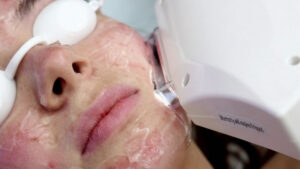
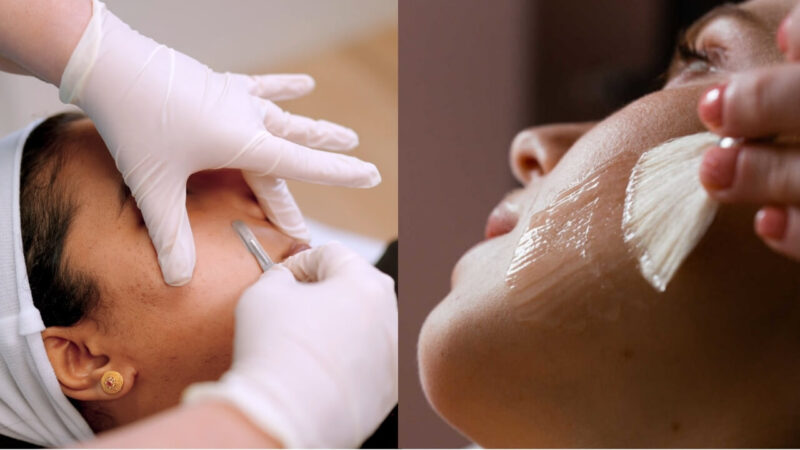
Dermaplaning and chemical peels rank among the most trusted treatments for revealing a smoother, more refreshed surface.
Both are designed to renew the skin, though their methods differ significantly.
One relies on physical exfoliation, while the other works through chemical stimulation to trigger renewal.
Many find themselves uncertain about which approach better suits their goals. Clarity often begins with learning how each treatment behaves and how it may interact with specific skin types or concerns.
A clear path forward typically starts with support from a skilled professional who can explain what each option offers. Once the basics are understood, choosing becomes easier and more aligned with personal comfort and skin readiness.
Choosing the Right Professional
A skilled professional significantly influences not only the safety of any skincare treatment but also the outcome it produces.
Effective results start with a personalized consultation—an opportunity to closely evaluate the skin’s condition, texture, and tone. Through this process, sensitivities, active concerns, and specific goals can be addressed intentionally.
Glo Esthetics has embraced this client-first method. Rather than rushing into a treatment, specialists conduct a hands-on assessment that guides each decision with precision. Nothing is left to guesswork when it comes to individual care.
View this post on Instagram
Before moving forward with any exfoliation technique, it matters how the skin reacts to stimulation. Scrutiny of prior product use, history of irritation, and recent exposure to sun or medication is critical.
- Triggers such as retinoids, recent waxing, or rosacea are typically reviewed
- Moisture barrier health often influences whether the skin is ready for active treatments
- Thorough evaluation minimizes risks like post-inflammatory hyperpigmentation or flare-ups
Instead of simply offering a menu of treatments, professionals build a tailored plan around the client’s skin behavior and lifestyle.
Every step is explained clearly, ensuring comfort and informed participation.
When a specialist listens carefully, asks focused questions, and interprets the skin’s cues, confidence builds naturally. That connection sets the stage for both safety and satisfaction.
- Clients often report feeling heard and respected, not rushed
- A detailed intake form includes medication history, allergies, and skincare habits
- Clear expectations reduce anxiety and help clients commit to aftercare
That level of guidance turns a simple treatment into something more thoughtful and empowering.
What does the Dermaplaning Treatment Include?
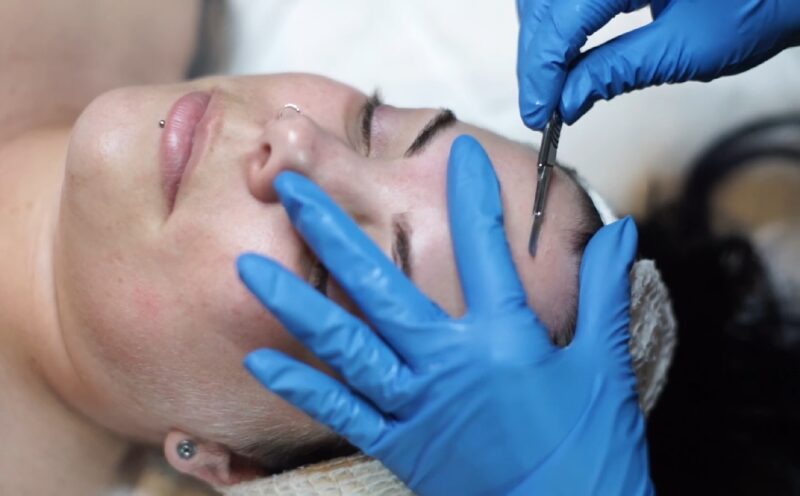
Dermaplaning removes dull surface debris using a surgical-grade blade.
It’s a controlled process, not rushed or aggressive, and performed by gliding a tool at a precise angle to exfoliate the skin and remove vellus hair, often referred to as peach fuzz.
Skin preparation typically involves gentle cleansing to create a smooth canvas.
After treatment, a refreshed complexion becomes visible quickly. Many people report their skin feeling soft, looking more even-toned, and appearing noticeably brighter. Compared to procedures that involve peels or downtime, this one delivers near-immediate cosmetic changes without requiring recovery days.
Professional Procedure and Key Application Steps
Professionals follow standardized steps to perform the treatment safely and effectively:
- A 45-degree angle is used when moving the blade, which minimizes the risk of cuts or irritation.
- Sessions typically last 20 to 30 minutes.
- Aloe-based soothers or similar calming agents are applied post-procedure to reduce any temporary redness.
- Sunscreen is applied at the end to prevent UV-related damage, which skin becomes more prone to afterward.
Results aren’t permanent, but many see improvements that last about three weeks. After this period, natural skin turnover rebuilds the top layer, and another session may be needed to maintain smoothness.
Suitable for Multiple Skin Conditions
It isn’t only about appearance. This method works well for certain mild dermatological concerns:
- Often selected by individuals with dry texture, early fine lines, acne scars, or those experiencing dullness due to environmental exposure.
- Even people with sensitive skin types may tolerate dermaplaning, although a professional consultation is essential before beginning.
Not ideal during active acne flare-ups, as scraping can worsen irritation or spread bacteria. For optimal outcomes, sessions should be spaced out, and sun exposure should be avoided in the days leading up to treatment.
Add-Ons and Cost Considerations
Clinics often recommend pairing this with other procedures:
- Chemical peels applied immediately after dermaplaning tend to penetrate more deeply and yield stronger effects.
- Prices for dermaplaning alone range between $150 and $250 per session. A peel added to the session may increase the cost by another $150 to $300.
Because the procedure is cosmetic, insurance providers do not typically reimburse it. That said, many choose it as an affordable option relative to laser resurfacing or injectables.
At-Home vs. In-Clinic Safety
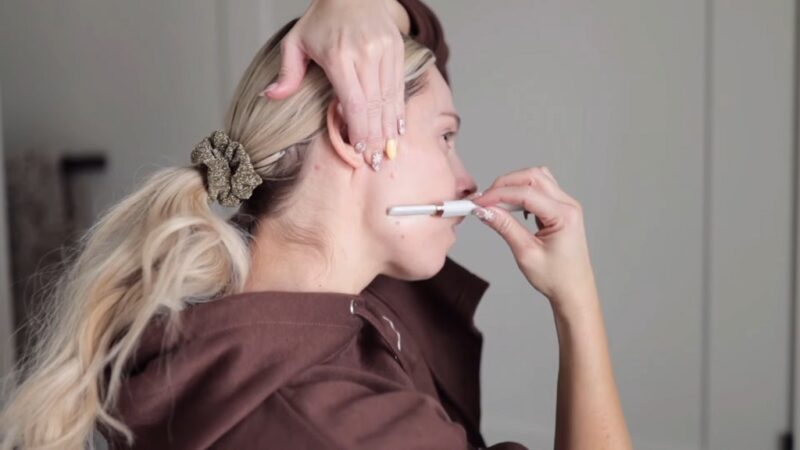
Consumer-grade versions of dermaplaning tools are available, but they don’t always deliver comparable results. There’s also more room for error.
Risk of infection, uneven exfoliation, or skin irritation increases when performed without training.
Professionals use medical-grade blades, sanitized tools, and have protocols to protect the skin during and after the session.
When performed in a clinical environment by a certified provider, dermaplaning carries a low risk of complications. Temporary redness and occasional breakouts may appear post-procedure but usually subside quickly. Rare side effects include light scarring or hyperpigmentation, particularly if sun exposure isn’t controlled afterward.
Maintenance and Daily Aftercare
Skin becomes more receptive to active ingredients after exfoliation, allowing moisturizers and serums to penetrate better.
Wearing SPF becomes non-negotiable, especially in the week following a session.
Harsh exfoliants or retinoids should be paused for several days to avoid over-sensitizing the skin.
A consistent skincare routine post-treatment helps prolong results and keeps the skin barrier strong.
Would you like to use this expanded overview to generate a long-form article or professional guide? I can help structure that next.
Dermaplaning Benefits You Can Notice
Some of the key benefits associated with dermaplaning include the following:
- Smoother, softer texture: The removal of surface buildup gives the skin a naturally polished feel. Makeup glides on more easily, and the face looks more even in natural light.
- Visible radiance: Dullness fades once the top layer is lifted, revealing a fresher surface that reflects light more evenly.
- Improved absorption of skincare products: Serums and moisturizers reach the skin more effectively because nothing blocks their path. This helps treatments work at their full potential.
- Refined peach fuzz removal: The gentle elimination of fine facial hair enhances the smoothness of the skin without changing its growth pattern.
How does the Chemical Peels Process Work?
Skin texture and clarity may benefit from a controlled exfoliation method called a chemical peel. Through carefully timed application of acids, this treatment removes layers of skin to allow healthier cells to rise to the surface.
Types of Peels and Their Targets
Peels are classified based on depth, each designed to address a specific concern.
Light peels work on the outermost layer. These are used for mild acne, slight discoloration, fine lines, or dry patches. Mild stinging may occur, but recovery tends to be quick—often under a week.
Medium peels go deeper, affecting both the surface and the upper dermis. They may improve acne scars, sun spots, and moderate wrinkles. Post-treatment redness and swelling are expected and can last up to two weeks.
Deep peels penetrate into the mid-dermis. They’re reserved for severe wrinkles, extensive sun damage, or precancerous growths. Results are often dramatic but come with significant downtime and a higher risk of complications.
What Happens During a Session
Initial steps involve skin preparation and cleansing. Depending on the depth of the peel, the approach varies.
Superficial treatments often involve glycolic or salicylic acid applied using gauze or a brush. A stinging sensation typically lasts only a few minutes. The skin whitens slightly as the acid activates.
Medium-depth procedures may use trichloroacetic acid (TCA) combined with glycolic acid. Cool compresses are often applied after the solution sets to ease any discomfort.
Deeper sessions involve phenol. Patients are typically sedated, and heart activity is monitored due to systemic risks. Phenol is applied in short, timed increments to minimize toxicity.
What to Expect Right After
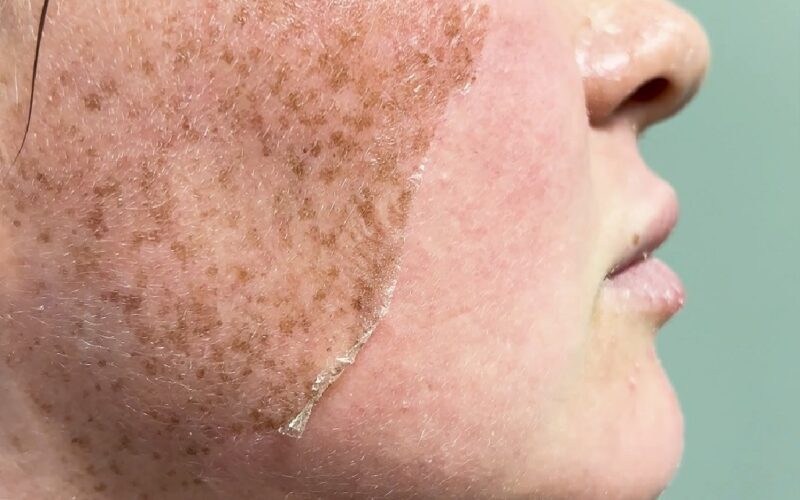
Recovery depends on the depth of the procedure:
- Mild treatments may result in slight redness or dryness. Makeup can typically be worn the following day.
- Moderate-level peels cause swelling and tenderness. Crusting may develop before the skin peels away within one to two weeks.
- Deeper interventions may require surgical dressings, prescription pain relief, and two weeks of intensive aftercare. Redness can persist for several months.
Doctors may recommend supportive products beforehand:
- Use of retinoid creams to boost skin turnover
- Bleaching agents, like hydroquinone to reduce pigmentation risk
- Antiviral medication to prevent herpes flare-ups
Chemical Peel Benefits to Consider
Some of the benefits commonly associated with chemical peels include the following:
- Brighter, more even tone: The treatment helps soften the appearance of discoloration, sun damage, and stubborn dullness, so the complexion appears clearer.
- Smoother, refined texture: The peel loosens buildup that sits deeper in the skin, which supports a more even feel and reduces rough patches.
- Support for blemish-prone or congested skin: Certain peel formulas help unclog pores and reduce the look of lingering marks left behind by breakouts.
- Enhanced radiance: Renewed skin creates a healthier glow that becomes more noticeable as the surface continues to smooth out.
Choosing the Right Treatment for Your Skin Goals
Every appointment begins with individual goals. These can range from surface-level refreshment to long-term skin renewal.
Skin sensitivity guides treatment choice. When skin reacts easily, lighter exfoliation methods tend to feel more comfortable. Dermaplaning offers that comfort, delivers a smooth result, and doesn’t interfere with routines.
Others look for deeper changes. Chemical peels target more persistent concerns such as dullness, discoloration, or uneven skin texture. Stronger exfoliation removes buildup and encourages visible improvement over time.