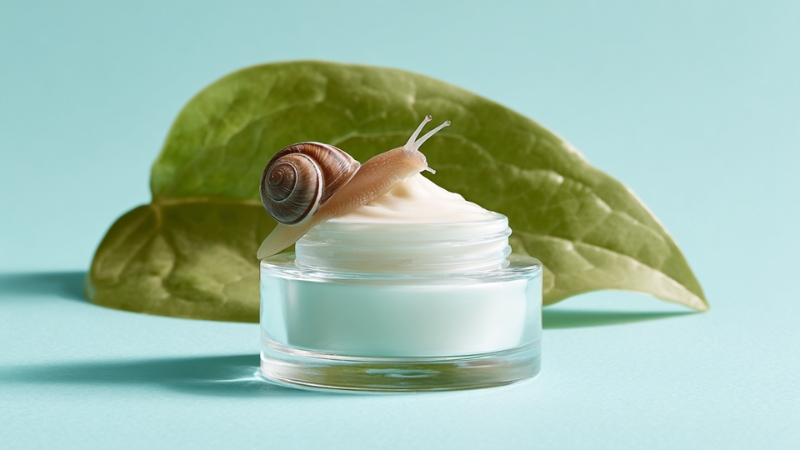
Snail mucin products are best understood as hydration and skin-barrier support products, not as acne treatments or anti-aging miracles. They work well for people with dehydrated, compromised, or over-treated skin who tolerate them without irritation.
They should be avoided, or at least approached with caution, by people with known snail allergies, strong dust-mite allergies, or a history of cosmetic contact dermatitis.
Whether snail mucin helps you depends far more on your skin biology and the full formula than on the ingredient’s reputation.
What Snail Mucin Actually Is in Skincare
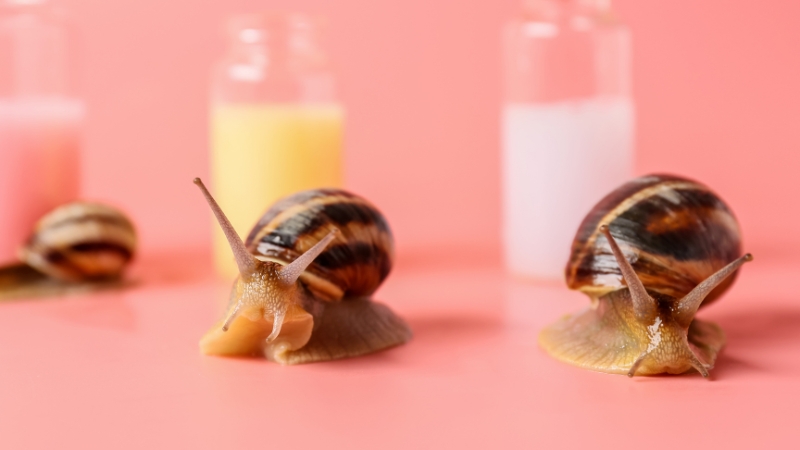
In cosmetic formulations, snail mucin appears as snail secretion filtrate. It is not a single active compound.
It is a biologically derived mixture that can include glycoproteins, humectant sugars, hyaluronic-acid-like components, allantoin, small peptides, trace minerals, and antimicrobial fragments. The exact composition varies depending on snail species, harvesting method, filtration, and processing.
This variability matters. Two products can both advertise “snail mucin” and behave very differently on skin because the supporting ingredients, preservatives, and concentrations shape the final effect.
From a formulation standpoint, snail mucin functions primarily as a film-forming humectant complex that sits on the skin, attracts water, and reduces moisture loss.
What the Evidence Supports and What it Does not
The strongest and most consistent finding across clinical and dermatology-review literature is improved skin hydration. Controlled and semi-controlled studies show increases in corneometry-measured hydration and, in some cases, reduced transepidermal water loss. These outcomes place snail mucin firmly in the category of barrier-support ingredients.
Claims about acne treatment, scar removal, or dramatic anti-aging effects are far weaker. Snail mucin does not act like benzoyl peroxide, retinoids, azelaic acid, or prescription acne therapies.
Where it can help acne-prone users is indirectly, by reducing irritation and barrier damage caused by harsher actives. Texture smoothing and mild improvements in fine lines have been reported in small studies, but these effects are subtle and product-dependent rather than guaranteed.
In short, snail mucin helps skin feel more comfortable and resilient. It does not fundamentally change skin behavior on its own.
Why do Some People Love Snail Mucin and Others React Badly
This ingredient has a polarized reputation for a reason. Because snail mucin is a complex biological extract, it contains multiple potential sensitizers.
Dermatology literature documents cases of allergic contact dermatitis linked specifically to high snail-secretion products. These reactions range from itching and redness to hives and eczematous flares.
There is also a real, documented phenomenon of cross-reactivity between snail proteins and house dust mites in allergic individuals. This does not mean that everyone with dust-mite allergies will react to snail mucin on the skin.
It does mean that people with strong atopic histories may be at higher risk and should not treat snail mucin as inherently “gentle” or “safe.”
This explains the mixed user experiences. On tolerant skin, snail mucin feels soothing and hydrating. On sensitized or allergy-prone skin, it can trigger inflammation quickly.
For Who Snail Mucin Products Are Most Suitable For
Snail mucin products make the most sense for users whose main issue is hydration and barrier stability, not active treatment.
They are often a good fit for people with dry skin that feels tight, flaky, or uncomfortable despite using moisturizers. They can also work well for people who use retinoids, exfoliating acids, or acne treatments and need a cushioning, non-occlusive hydration layer to reduce irritation.
Some post-procedure contexts, such as after certain laser treatments or professional exfoliation, also show improved comfort and hydration when snail-based soothing creams are used, though this is a narrower clinical setting rather than everyday skincare.
Who Should Avoid Snail Mucin or Use Extreme Caution
Group
Reason
People with known snail allergy
Direct allergen exposure
People with a history of cosmetic contact dermatitis
Higher risk of reacting to complex biological extracts
People with strong dust-mite allergies or atopic asthma
Documented cross-reactivity increases risk
Highly reactive skin that stings with most products
Snail mucin formulas often include other irritants
Users seeking vegan skincare
Snail mucin is animal-derived
For these groups, the risk-to-benefit ratio is unfavorable, especially since hydration and barrier repair can be achieved with non-animal humectants like glycerin, panthenol, beta-glucan, and ceramides.
Real Snail Mucin Products And Who They Actually Suit
COSRX Advanced Snail 96 Mucin Power Essence
Aspect
Details
Snail Content
Very high (96 percent SSF)
Texture
Lightweight, gel-like, slightly stringy
Best For
Dehydrated, oily-dehydrated, compromised skin
Watch Out For
Can feel sticky under sunscreen for some users
This is the most widely used snail mucin product and often the entry point. It works best as a hydration layer rather than a treatment serum.
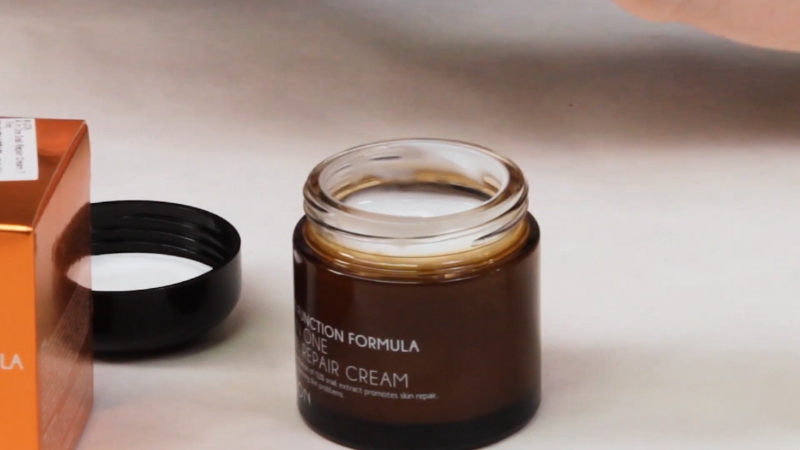
Mizon Snail Repair Cream
Aspect
Details
Snail Content
High SSF combined with occlusives
Texture
Creamy, more nourishing
Best For
Dry to normal skin, nighttime routines
Watch Out For
Can feel heavy on oily or acne-prone skin
This product shows how snail mucin behaves differently when paired with richer emollients.
Benton Snail Bee High Content Essence
View this post on Instagram
Aspect
Details
Snail Content
Moderate SSF plus bee venom
Texture
Lightweight essence
Best For
Texture concerns, post-acne marks
Watch Out For
Bee venom adds another allergen risk
This formula highlights why the full ingredient list matters more than snail mucin alone.
Missha Super Aqua Cell Renew Snail Cream
@missha.official Put down the heavy creams this summer ☀️ Super Aqua Snail Cream gives weightless hydration and a fresh glow without the sticky, slimey feeling 🐌✨ #Missha #kbeauty #koreanskincare #snailmucin #moisturizer #summerskincare ♬ original sound – missha.official
Aspect
Details
Snail Content
Moderate SSF with anti-aging additives
Texture
Cream-gel
Best For
Normal to dry skin seeking hydration plus softness
Watch Out For
Added fragrance may irritate sensitive skin
What Actually Matters When Comparing Snail Mucin Products
Most reviews overemphasize the percentage of snail mucin. In practice, the percentage alone is not decisive. What determines performance and tolerability is the full formulation.
Key factors to evaluate include where snail secretion appears in the ingredient list, what other humectants and barrier-support ingredients are present, and whether the formula contains fragrance, essential oils, or aggressive preservatives.
Texture also matters. Many snail mucin products have a stringy, gel-like feel that some users love and others find sticky or prone to pilling under sunscreen or makeup.
A well-formulated product with moderate snail mucin and strong supporting ingredients will usually outperform a minimalist formula that relies solely on a high mucin percentage.
Practical Patch-Testing Guidance
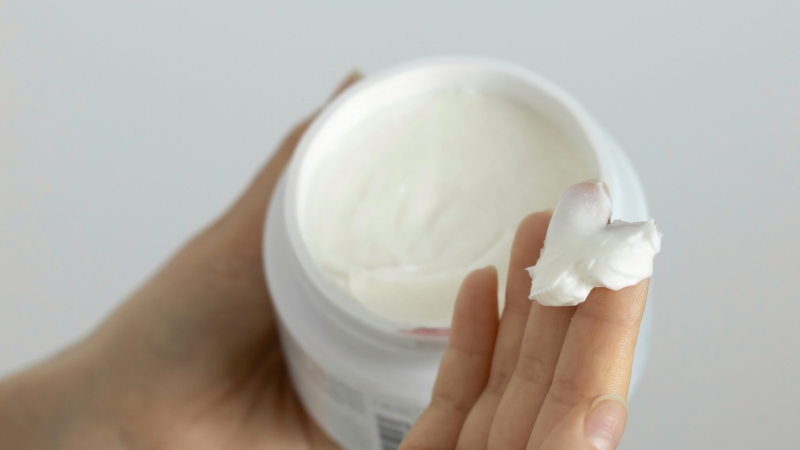
Because allergic reactions are documented, snail mucin products should not be applied blindly to the face.
A simple patch test behind the ear or on the inner forearm for several days reduces the risk significantly. Any itching, redness, or swelling during that period is a clear signal to stop.
This step is especially important for users with seasonal allergies, asthma, eczema history, or previous reactions to “natural” skincare.
The Bottom Line
Snail mucin is neither skincare hype nor a universal solution. It is a hydrating, barrier-support ingredient with legitimate clinical backing for moisture retention and skin comfort.
It can be extremely helpful for the right skin type and completely wrong for others.
If your skin needs hydration, feels compromised, and you tolerate biologically derived ingredients well, snail mucin products can fit logically into your routine. If you have allergy-prone or highly reactive skin, the risks often outweigh the benefits, and safer alternatives exist.
Used with realistic expectations and proper patch testing, snail mucin can be useful. Treated as a miracle active, it almost always disappoints.