Did you know that up to 90% of a facial cleanser can be nothing more than water? Many luxury creams priced at fifty dollars or more rely heavily on dilution rather than performance.
Waterless skincare has gained traction as an alternative that replaces cheap volume with highly concentrated actives.
Supporters frame it as a smarter option for skin health and environmental impact, while critics see clever positioning at work.
A closer look at formulation science, performance, and trade-offs reveals why water dominates skincare and what happens when it is removed.
Why Water Is Used in Most Skincare?
Water serves a practical purpose in cosmetic chemistry rather than existing only as empty volume. Many commonly used actives dissolve only in water, which makes a water phase necessary for their delivery.
Ingredients such as AHAs and peptides depend on water to stay stable, disperse evenly, and perform consistently on skin. Without a water base, these compounds would separate, degrade, or lose effectiveness.
- Solubilization of water-soluble actives that cannot function in oil-only systems
- Even distribution of ingredients across skin for predictable dosing
- Controlled viscosity that keeps formulas stable during storage
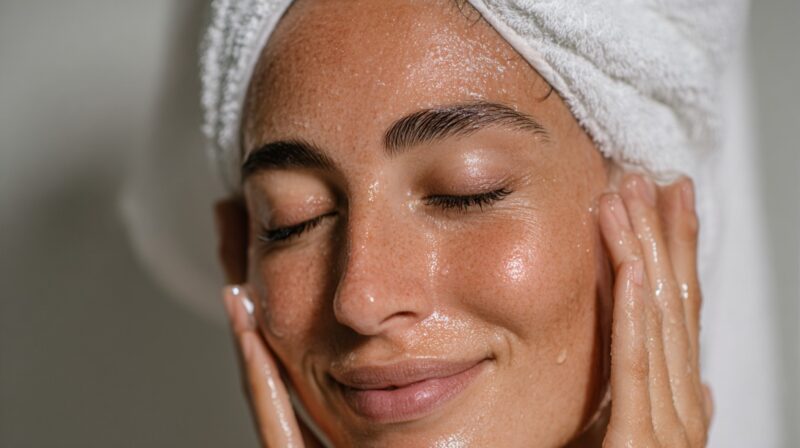
Texture plays an equally influential role. Skincare must feel pleasant enough for daily use, or performance becomes irrelevant. Water lightens formulas, improves glide, and allows cleansers to rinse away cleanly without residue.
Familiar sensory cues linked to creams and gels depend heavily on water content, shaping consumer trust and repeat purchase. Absence of water often results in heavier textures that feel unfamiliar to many users.
Case Against Water – Why It Often Acts as Filler
Despite its functional benefits, water often dominates formulas well past necessity. Many creams and cleansers rely on water for the majority of their volume, sometimes reaching extreme proportions.
- Traditional creams frequently contain up to 60% to 80% water
- Many water-based formulas fall within a 60% to 90% range
Cost efficiency drives much of this design choice. Water allows brands to scale volume while keeping production costs low.
Skin benefits tied directly to water remain minimal, since hydration effects typically come from occlusives and humectants rather than water itself.
High water content introduces another requirement. Preservatives become mandatory to prevent microbial growth.
Sensitivity issues often trace back to these preservation systems rather than the activities. For reactive skin, this trade-off can lead to irritation without meaningful payoff.
Premium pricing then creates a mismatch, as only a small fraction of the product delivers active performance.
Benefits of Waterless Skincare
Waterless skincare shifts focus away from volume and toward function. Removal of water forces every ingredient to justify its place in a formula, which changes how performance, value, and longevity are measured.
Results tend to depend more on ingredient quality and concentration rather than texture tricks or dilution.
Higher Potency and Concentration
Waterless formulas remove dilution entirely. Concentration replaces volume, shifting value toward active delivery instead of filler. Ingredient ratios reveal how dramatic the difference can be once water is removed.
- Waterless products often contain 90% to 100% active or functional ingredients
- Water-based products commonly deliver only 10% to 40% beneficial compounds
Absence of water keeps actives at full strength, which increases impact per application. Smaller amounts deliver noticeable results, reducing overuse and product waste while improving cost efficiency over time.
Better Fit for Sensitive Skin
Water creates an environment where preservatives become unavoidable. Removing water reduces preservation needs and lowers exposure to ingredients that often trigger irritation. Some anhydrous formulas rely on naturally stable oils and waxes, while others need only minimal protection against spoilage.
Reduced ingredient complexity often benefits compromised or reactive skin. Fewer stabilizers, emulsifiers, and preservatives mean fewer variables that can disrupt the skin barrier or cause sensitivity during long-term use.
View this post on Instagram
Enhanced Absorption and Barrier Support
Oil-based systems align more closely with skin biology. Lipophilic ingredients interact naturally with the lipid matrix of the skin barrier, supporting both absorption and barrier repair. Certain nutrients perform significantly better under these conditions.
- Fat-soluble vitamins A, D, E, and K absorb more efficiently in oil systems
- Essential fatty acids support barrier repair by mimicking natural sebum
Compatibility with skin lipids can improve moisture retention, strengthen barrier integrity, and reduce transepidermal water loss without relying on heavy occlusives.
Longer Shelf Life
Lower water content limits bacterial growth and slows spoilage. Practical lifespan often increases as a direct result, especially in daily-use products.
- Concentrated products commonly last 60 to 90 days with regular use
- Many water-based products last only 30 to 45 days
Extended lifespan offsets higher upfront cost by reducing replacement frequency and minimizing expired product waste.
Environmental and Travel Advantages
Concentration affects logistics as much as performance. Smaller packaging reduces material use, while lighter weight lowers shipping emissions.
Fewer products can replace multi-step routines, which simplifies storage and travel.
Solid formats and powders avoid liquid restrictions entirely and often require less protective packaging.
Longer-lasting products also reduce manufacturing demand over time, which contributes to lower overall resource use.
Drawbacks and Nuances

Waterless skincare delivers advantages, but trade-offs remain. Performance depends heavily on correct use, formulation skill, and realistic expectations.
Texture and Sensory Adjustment
Waterless products often feel heavier or more occlusive during initial use. Users accustomed to gels or lotions may need to adapt application habits.
Small amounts typically outperform generous application, especially with oils and balms.
Preservation Still Matters
Oil-based or dry products remain exposed to ambient moisture during use. Spoilage can still occur, particularly in humid environments or with repeated contact.
Preservation strategies may still apply, even without water in the formula.
Formulation Limits
Not every active works outside a water phase. Many water-soluble ingredients lose functionality or cannot be included at all.
Certain penetration enhancers also depend on water, which narrows formulation options and limits compatibility with some treatment goals.
Sustainability Is Not Simple
Packaging reduction tells only part of the story. Manufacturing still relies on water for equipment cleaning and processing.
Oil sourcing introduces agricultural and extraction impacts that can counterbalance reduced packaging waste. Environmental benefit depends on the entire production chain rather than the absence of water in the final product.
How to Identify and Choose Waterless Products
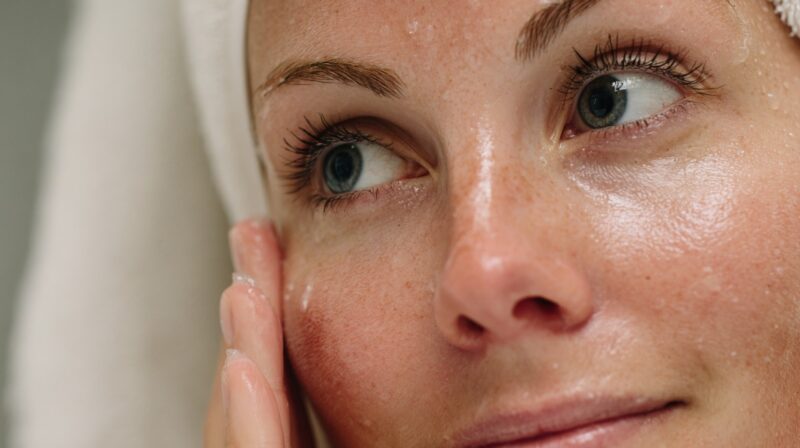
Ingredient lists provide immediate clarity. Aqua or water listed near the top signals a water-based formula.
- Cleansing balms and oil cleansers
- Powder cleansers and masks are activated upon use
- Solid creams and bars designed for extended longevity
Application technique influences results. Two or three drops of a concentrated oil often replace full pumps of serum.
Slightly damp skin can improve spread and absorption without increasing product use.
Is a Switch Worth It
Waterless skincare suits dry, sensitive, and mature skin types, along with consumers focused on waste reduction or simplified routines. Compact formats favor travel and minimalism.
Water-based products still hold value for routines built around water-soluble actives like AHAs or peptides.
Lightweight textures also remain preferable for users seeking fast absorption and minimal residue. Natural positioning alone does not guarantee gentle performance, making ingredient evaluation essential.