Buying fragrance often feels simple at first glance. A bottle looks good, a tester strip smells nice, and the name sounds familiar. A few minutes later, the box shows Eau de Toilette, Eau de Parfum, Parfum, or Cologne, and suddenly the whole process slows down.
Shoppers start asking whether one lasts longer, whether one projects more, and whether a higher label always means a better buy.
The truth is more practical and more forgiving. The fragrance industry itself admits that perfume “levels” are not rigid rules. They act as ranges, not guarantees.
What they reliably show is how much aromatic concentrate sits inside the alcohol base, which then influences how a scent behaves on skin, how long it tends to stay, and how quickly it fades.
Once that foundation is clear, the labels stop feeling mysterious and start feeling useful.
Key Takeaways
- Perfume “levels” describe concentration ranges, not fixed performance rules.
- Higher concentration often means richer scent and longer wear, with higher cost.
- Eau de Toilette offers balanced daily wear, while Eau de Parfum suits longer days and evenings.
- Longevity also depends on formula design, skin type, and environment, not only the label.
What Perfume “Levels” Actually Refer To
View this post on Instagram
Modern fine fragrance usually comes as a blend of two main parts:
- Fragrance concentrate made from aroma molecules, essential oils, and other aromatic materials
- A carrier base, most often ethanol, sometimes blended with water and stabilizers
The word “level” points to the typical percentage of fragrance concentrate in that liquid blend. The International Fragrance Association describes these as common usage ranges, not fixed laws. Brands are free to adjust formulas within those boundaries.
A higher percentage often means:
- A scent that feels fuller and more present
- A dry down that lingers longer
- A higher cost per milliliter
Performance still depends on many other factors, which will come later.
Typical Concentration Ranges in Everyday Terms
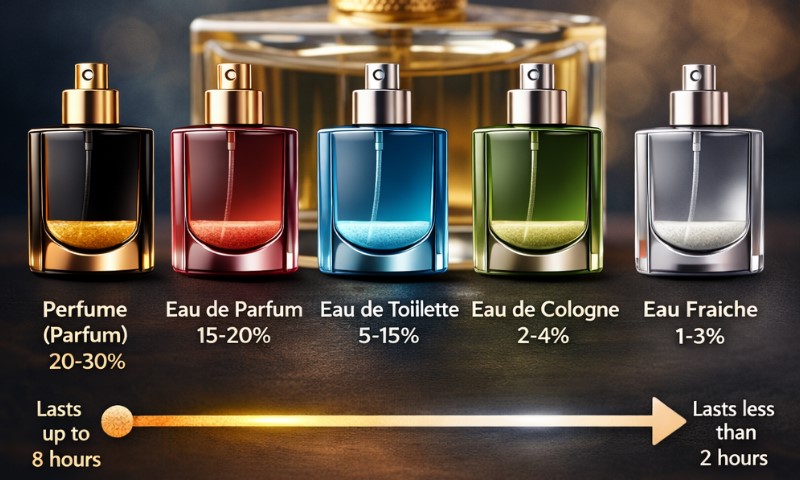
Below are the ranges most often used for ethanol-based fragrances, along with how wear tends to feel in daily life. The numbers stay consistent across mainstream fragrance education and IFRA references.
| Label on bottle | Typical fragrance concentration | How it usually feels | Common wear time |
| Eau Fraîche or splash | 1%–3% | Very light, skin close | Around 1–3 hours |
| Eau de Cologne (EdC) | 3%–8% (typical around 5%) | Fresh, airy, quick lift | Around 1–4 hours |
| Eau de Toilette (EdT) | 5%–15% (typical around 10%) | Noticeable without heaviness | Around 2–6 hours |
| Eau de Parfum (EdP) | 10%–20% (typical around 15%) | Richer, deeper dry down | Around 4–8+ hours |
| Parfum or Extrait | 15%–40% (typical around 20%) | Dense, smooth, slow burn | Often 6–12+ hours |
Wear time remains variable. Skin type, heat, humidity, spray amount, and ingredient choices can change real-life results even when the label stays the same.
Why the Same Scent Changes Across EdT, EdP, and Parfum
A common assumption says that Eau de Parfum is simply a stronger Eau de Toilette. In practice, many brands rebalance formulas when moving between levels. Adjustments help keep the character recognizable even while concentration changes.
Those adjustments can alter:
- How much emphasis lands on top notes versus base notes
- Perceived sweetness, smokiness, woodiness, amber warmth, or musk presence
- Projection, which refers to how far the scent travels
- Longevity, which refers to how long it stays noticeable
Higher concentration changes the way a fragrance develops over time. Stronger does not automatically translate to better. It simply creates a different wearing experience.
Cologne and Why the Word Carries Two Meanings
The word “cologne” causes more confusion than any other fragrance term.
Eau de Cologne as a Style and Concentration
Historically, Eau de Cologne started in Cologne, Germany. The Farina house traces its origin to 1709, describing a citrus-driven creation that became popular across European courts. Over time, the style became associated with freshness, brightness, and fast evaporation.
In modern concentration terms, Eau de Cologne typically falls between 3% and 8%, with around 5% appearing most often.
Real life wear tends to feel like:
- A fast, sparkling opening
- Clean citrus, herbs, and light florals
- A refreshing post-shower or hot-weather choice
- Reapplication becoming normal rather than optional
“Cologne” as Marketing Language
In many parts of the United States, “cologne” also works as a casual word for men’s fragrance in general.
A bottle labeled Eau de Parfum may still be called cologne in conversation. When shopping, always rely on the actual concentration label printed on the packaging rather than the casual term.
Eau de Toilette as the Everyday Favorite
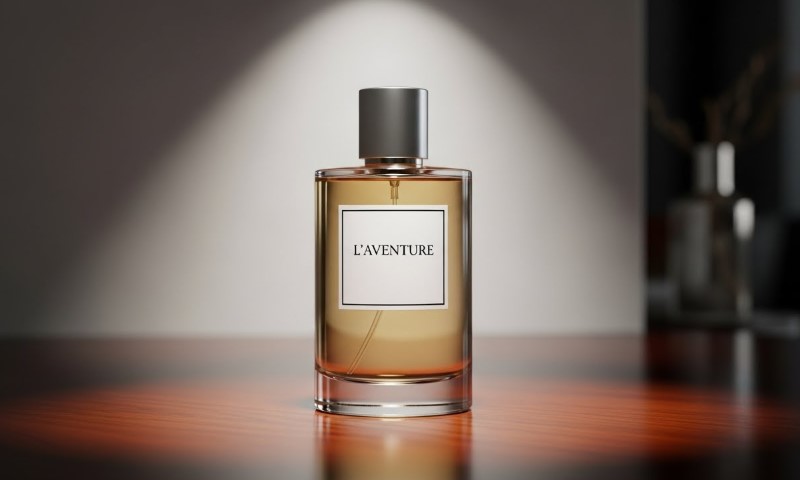
Eau de Toilette sits in the 5%–15% range, with around 10% appearing most frequently.
Retail education often places EdT wear time around 2–6 hours, though formula design and skin chemistry still shape real-life performance.
EdT earns popularity because it balances several needs:
- Noticeability without heaviness
- Brighter openings that suit daytime
- Prices that feel comfortable for frequent use
When EdT Works Best
- Office or close contact settings
- Warm or humid climates
- Daily errands and casual wear
- Fragrance rotation for people who enjoy variety
Some fragrances feel surprisingly strong even at EdT concentration because their formulas rely on long-lasting aroma materials. Composition can dominate performance more than the percentage alone.
Eau de Parfum for Deeper Wear and Longer Days
Eau de Parfum usually ranges from 10%–20%, with around 15% used most often.
Lifestyle and beauty references commonly associate EdP with:
- A fuller base
- Longer wear compared with EdT
- More noticeable dry down development
Where EdP Tends to Feel Natural
- Cooler seasons, such as fall and winter
- Evenings, dinners, and events
- Long days with limited reapplication time
- Scents built on woods, resins, amber, vanilla, and musks
Many brands treat EdP as the “signature” version of a scent. It stays spray-friendly while offering richer development.
Parfum, Extrait, and Perfume Extract
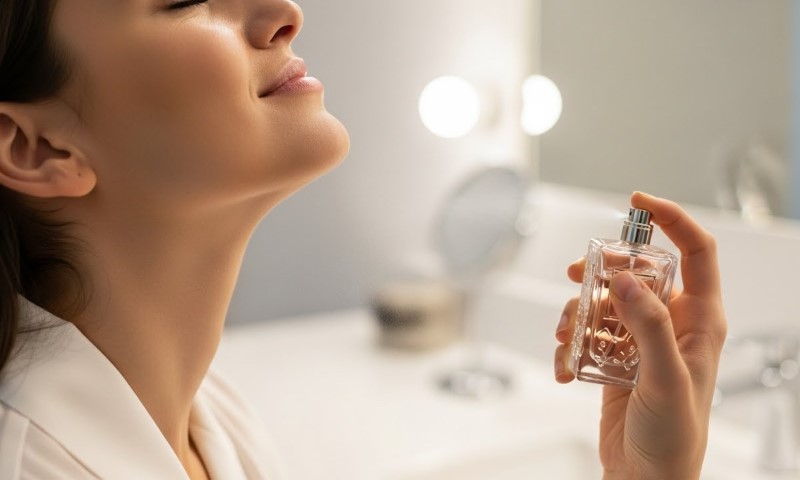
Parfum, also called extrait or perfume extract, usually represents the highest mainstream concentration. Typical ranges fall between 15%–40%, with around 20% appearing most often.
At that level, fragrance behavior shifts:
- The opening can feel smoother and less sharp
- Fewer sprays deliver noticeable presence
- Heart and base notes gain more attention
- Price per milliliter increases
Recent fragrance reporting often connects extrait formats with wear times in the 6–12+ hour range, while still noting that formulation choices matter.
How to Apply Extrait Without Overwhelming a Room
- Start with 1 spray
- Wait about 10 minutes, then evaluate
- Apply lower on the torso, such as the chest under clothing
- Skip spray clouds in tight indoor spaces
“Intense,” “Elixir,” “Absolu,” and “Extreme”
Terms such as Intense, Elixir, Absolu, or Extreme do not represent universal concentration categories. They usually signal:
- A higher concentration
- A darker or sweeter rework
- More emphasis on base materials and projection
Brands apply different strategies when releasing such flankers. Treat the words as a hint toward a bolder character, then rely on skin testing for real results.
What Actually Controls Longevity and Sillage
Concentration influences performance, but it acts as only one part of the picture.
Materials and Structure
- Citrus and light aromatics fade faster
- Woods, resins, musks, ambers, and certain modern aroma molecules last much longer
- A fragrance built for projection can feel louder even at a lower concentration
Vogue commentary repeatedly points out that higher concentration does not guarantee better projection or higher quality.
Skin Chemistry and Environment
- Dry skin often absorbs fragrance faster
- Heat increases diffusion, sometimes raising perceived strength while shortening wear
- Humidity shapes how florals and musks bloom
Nose Fatigue
People stop noticing a scent after extended exposure, even while others continue to smell it. Fragrance reporting frequently mentions nose fatigue when discussing long-lasting scents.
Quick Guide for Shopping
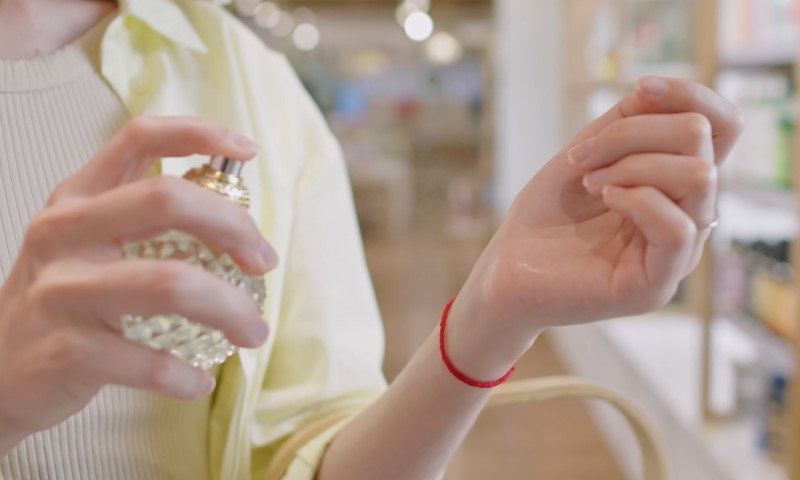
If clean, low-commitment wear matters most:
- Eau Fraîche or Eau de Cologne for lighter wear and easier reapplication
If daily work and errands guide the choice:
- Eau de Toilette offers balance and comfort
If fewer reapplications and deeper base notes matter:
- Eau de Parfum fits longer days and cooler air
If maximum richness per spray sounds appealing:
- Parfum or extrait applied sparingly offers density and long wear
Application Habits That Shape Results
Small technique changes can improve real-world performance.
- Apply to moisturized skin using unscented lotion
- Spray from a consistent distance and allow drying time
- Use clothing carefully for longevity, while staying mindful of delicate fabrics
- Rubbing wrists together
- Heavy overspraying in enclosed spaces
- Storing bottles in heat or direct sunligh
Storage and Shelf Life
Mainstream beauty guidance often places fragrance shelf life around 3–5 years, depending on formula and storage conditions.
Practical Storage Habits
- Keep bottles in cool, dark places
- Avoid bathroom heat and humidity swings
- Close caps tightly to reduce oxidation
Signs of Degradation
- Sour or harsh alcohol smell that does not settle
- Dramatic darkening of liquid
- Top notes fading much faster than earlier use
Myths Worth Dropping
- “EdP always lasts longer than EdT”– Often true on average, not guaranteed. Usage ranges vary, and definitions are not fixed.
- “Extrait always means better quality” – Higher concentration can feel richer, though quality depends on materials and composition.
- “Cologne is weak” – Eau de Cologne usually carries a lighter concentration, while “cologne” as a casual word says nothing about strength. The actual format label tells the real story.
Closing Thoughts
Perfume levels offer guidance, not promises. They help narrow choices, but real-life wear depends on formula design, skin chemistry, climate, and application habits.
Once the ranges become familiar, shopping grows easier, testing feels more purposeful, and personal style takes the lead.