

Sunscreen plays a vital role in protecting skin against harmful UV rays, especially during summer months and outdoor activities.
Clothing often pays the price for that protection.
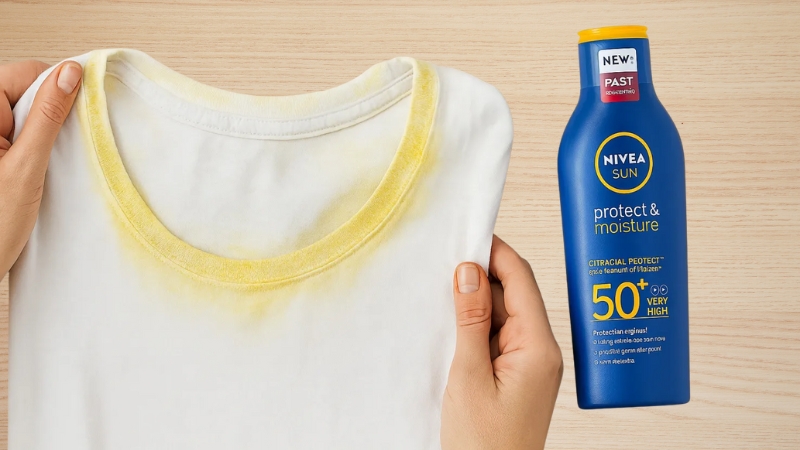
Greasy marks and stubborn yellow or orange-brown discoloration can appear after contact with sunscreen. Oils in many formulas soak into fabric fibers and leave dark, slick patches.
Avobenzone, a common chemical UV filter, reacts with iron found in water and creates hard-to-remove discoloration known as OXXO staining.
Untreated marks can settle into fibers and permanently damage garments, turning favorite pieces into frustrating losses.
Prevention Tips

Better habits can dramatically reduce the chance of stains forming, especially before clothing ever comes into contact with sunscreen.
Sunscreen works best when given time to absorb into the skin, which also lowers transfer onto fabric.
The application should happen 15 to 30 minutes before getting dressed.
Product choice also plays a major role in stain prevention, since mineral-based formulas behave differently from chemical ones.
Key preventive choices that reduce staining risk include:
Clothing selection matters just as much as sunscreen selection. Light colored fabrics reveal discoloration quickly, while darker tones offer more forgiveness.
Extra coverage options reduce skin exposure and fabric contact at the same time.
UPF-rated clothing and lightweight cover-ups provide sun protection without requiring sunscreen underneath garments, which greatly lowers staining potential. For example, women’s swimsuits designed with UPF-rated fabrics offer both sun defense and stain-reducing benefits.
Immediate Action Steps for Fresh Stains
Fast action makes a major difference once sunscreen touches clothing, since fresh stains respond far better than dried ones.
Excess product should be removed carefully before it spreads or settles deeper into fibers.
Blotting works better than rubbing because friction pushes oils further into fabric.
Early treatment relies on a few critical steps that protect fibers:
Heat creates permanent damage when stains remain present. Dryers, hot water, and steam cause oils and chemical residues to bond with fibers.
All heat sources should stay away until discoloration disappears completely.
Pre-Treatment Methods
Successful stain removal starts before a garment ever reaches the washing machine. Pre-treatment allows cleaning agents time to loosen oils, neutralize discoloration, and protect fabric fibers against permanent damage.
Sunscreen stains vary based on formula and fabric type, so choosing a method that matches the stain makes a noticeable difference.
For Greasy Stains Caused by Oil-Based Sunscreens
Oil-based sunscreens tend to soak quickly into fabric, leaving slick, dark marks that cling tightly to fibers. Grease-cutting products work best at this stage because they break apart oils before water carries them away.
Dish soap remains one of the most reliable options due to its ability to dissolve grease without harming most fabrics.
The application should stay targeted and controlled. A small amount of dish soap placed directly on the stain needs time to work.
Allowing a 15 to 30 minute rest period gives the soap time to loosen oils. Gentle rubbing using fingers or a soft brush helps lift residue before rinsing with warm water, provided fabric care instructions allow heat at that level.
Absorbent powders serve a different purpose and work best when stains still feel oily to the touch. These materials draw grease upward and out of fabric rather than dissolving it.
Effective options include:
Powder should remain on the stain for at least 15 minutes before brushing away. Washing should follow immediately to prevent reabsorption.
Gall soap provides another dependable option, especially for heavier or older stains.
Rubbing it directly into the affected area and allowing a 30-minute soak helps release both fresh and dried oily residue before laundering.
For Yellow or Orange Brown Stains Caused by Avobenzone
View this post on Instagram
Discoloration caused by avobenzone behaves differently from oil stains and often appears after washing rather than immediately.
Chemical reactions between avobenzone and iron in water create yellow or orange-brown marks that require acidic treatments to reverse.
White vinegar offers a simple and effective solution. Equal parts vinegar and water create a soaking mixture that neutralizes discoloration when applied for about 30 minutes prior to laundering.
Acidic solutions help counteract mineral reactions responsible for staining and prepare fabric for successful washing.
Fabric color plays a critical role when selecting whitening methods. Lemon juice paired with sunlight should only be used on white garments.
Fresh juice applied directly to the stain, followed by up to one hour in direct sunlight, helps lighten discoloration naturally before washing.
Baking soda paste works well for set stains that resist lighter treatments.
Water mixed into baking soda creates a paste that can remain on the stain for several hours, allowing time to loosen residue before rinsing.
Enzyme-based detergents also assist by breaking down lingering oils and organic material trapped in fibers. Spot testing remains essential before treating visible areas, especially on dyed fabrics.
For Delicate Fabrics Such as Silk and Viscose
Delicate fabrics require slower, gentler care to avoid fiber damage or texture changes.
Aggressive cleaning often causes more harm than the stain itself. Initial treatment should focus on absorption rather than scrubbing.
Gentle blotting combined with cornstarch or baking soda draws out oils without stressing the fabric structure.
Cleaning agents must remain mild and controlled. Hand washing with gentle soap or gall soap offers effective cleaning without stripping fibers.
Harsh detergents and strong chemicals increase the risk of discoloration, distortion, or fiber breakage.
Protective handling choices that preserve delicate materials include:
Ironing should only take place after stains have been fully removed. Fabric should remain slightly damp, turned inside out, protected with a pressing cloth, and exposed to low heat only.
Careful handling at this stage prevents shine marks, scorching, and permanent texture changes.
Washing the Garment
@lauradebarra Removing suncream stains #suncream #stains #stainremover #stainremoval #suncreamstains #sunlotion #laundry #laundrytok #laundrytips #washingclothes #washingmachine #slowfashion #garmentgoddess #cleaning #ecoclean #sustainablefashion ♬ original sound – LauradeBarra
Care labels provide essential guidance and should always be reviewed before washing.
Liquid detergent performs better than powder because residue buildup can worsen discoloration.
Warm water works well when fabric instructions allow, while fabric softener should stay out of the process since it binds stains into fibers.
Inspection plays a crucial role before drying. Any remaining mark requires repeated treatment.
Drying should happen only after full stain removal, since air drying or machine drying locks in discoloration once heat enters the process.
Closing Thoughts
Sunscreen stains show up often but remain manageable with the right response. Quick action protects clothing and prevents permanent damage.
Preventive habits like early application, mineral sunscreens, and darker clothing reduce risk.
Cleaning methods should match stain type. Oily residue responds best to dish soap and absorbent powders.
Yellowing caused by chemical filters improves with vinegar, lemon juice, or enzyme cleaners.
Delicate fabrics demand patience and gentle products. Heat should always wait until stains disappear completely.