Hair porosity determines how hair interacts with moisture, products, and protein treatments.
Cuticle structure controls absorption speed, retention ability, and overall hair response during daily care. Differences between low porosity hair and high porosity hair explain why similar routines produce opposite results across hair types.
Several key factors connect porosity to hair behavior and long-term condition:
- Moisture absorption speed affects dryness, softness, and frizz control.
- Product penetration influences buildup, effectiveness, and styling results.
- Drying time signals how open or compact cuticles remain.
- Protein response impacts strength, elasticity, and breakage risk.
Low porosity hair and high porosity hair require different strategies to maintain balance. Proper identification helps prevent overloading, dryness, and unnecessary damage.
Test methods and visible signs make porosity recognition practical without professional tools.
Hair Porosity Basics
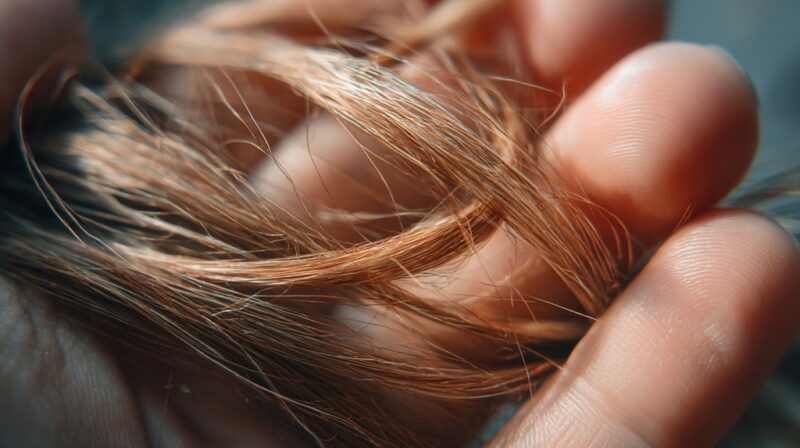
| Feature | Low | High |
|---|---|---|
| Water Absorption | Slow | Quick |
| Dry Time | Long | Fast |
| Moisture Retention | Good (if penetrated) | Poor |
| Product Absorption | Sits on top | Absorbs fast, may cause overload |
| Texture | Smooth, shiny | Frizzy, rough |
| Needs | Heat to open cuticle | Moisture sealing, gentle care |
Hair cuticles function like overlapping scales that control how moisture enters and exits each strand. Cuticle position directly affects hydration behavior and product performance.
Flat, tightly bound cuticles slow moisture entry and create low porosity.
Lifted, chipped, or damaged cuticles allow rapid moisture movement and cause high porosity. Medium sits between these conditions and supports steady absorption paired with reliable retention.
Porosity plays a direct role in how hair reacts during cleansing, conditioning, and styling. Moisture interaction changes based on cuticle condition, which explains why identical products perform differently on different hair types.
Three main porosity categories shape daily hair behavior, each carrying specific characteristics that guide care choices:
- Low resists water and products because cuticles remain compact and closed.
- Medium absorbs moisture evenly and maintains hydration with minimal effort.
- High takes in moisture quickly but releases it just as fast due to open cuticles.
Porosity level influences detangling ease, shine, frizz control, and long-term hair health, making accurate identification necessary for stable routines.
Low Porosity Hair
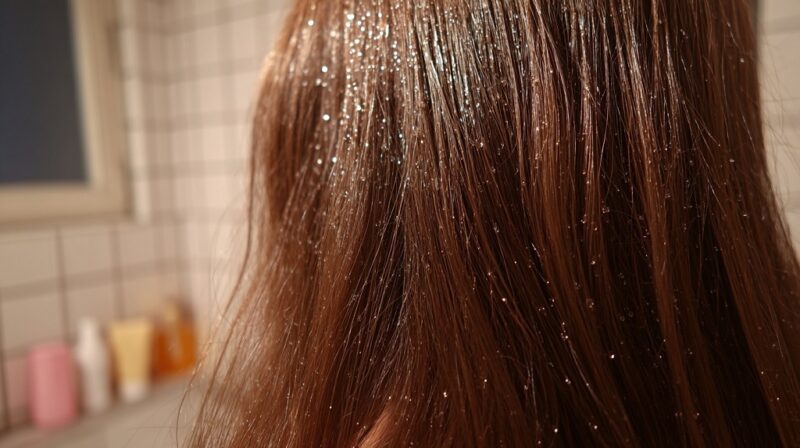
Low porosity hair naturally resists moisture because cuticles stay flat and tightly sealed. Water often gathers on the surface rather than penetrating the strand.
Product absorption tends to be slow, which increases the chance of residue buildup. Drying time after washing usually feels extended, even with lightweight routines.
Specific patterns appear during regular care that signal low porosity:
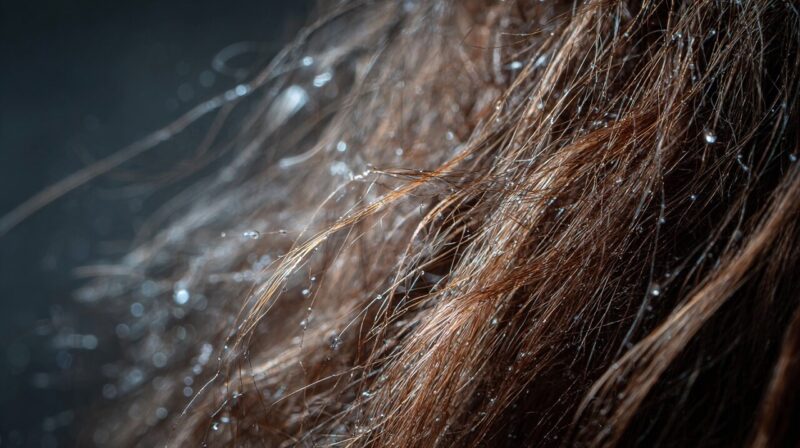
- Water beads on hair during washing or misting.
- Creams and oils remain on strands instead of soaking in.
- Hair stays wet longer compared to other porosity types.
Moisture can still be achieved with the right techniques. Heat applied through steam or warm water gently lifts cuticles and improves absorption.
Lightweight, water-based formulas limit surface buildup and allow better penetration. Regular clarifying removes accumulated residue that blocks moisture entry and restores flexibility.
High Porosity Hair

High porosity hair features cuticles that remain open due to damage or natural structure. Moisture enters easily but escapes just as quickly, creating an ongoing cycle of dryness.
Hair often dries rapidly after washing and feels rough or uneven to the touch. Frizz and tangling occur frequently, while shine appears dull because cuticles fail to lie flat.
Several external and chemical factors commonly contribute to this condition:
- Chemical processing weakens cuticle layers and increases gaps.
- UV exposure breaks down protective barriers over time.
- Excessive heat styling accelerates structural damage.
Care routines aim to slow moisture loss and reinforce cuticle protection. Leave-in conditioners and hydrating treatments help trap water inside the strand.
Gentle cleansing prevents additional dryness. Reduced heat exposure supports cuticle stability and lowers breakage risk.
What are the Test Methods?
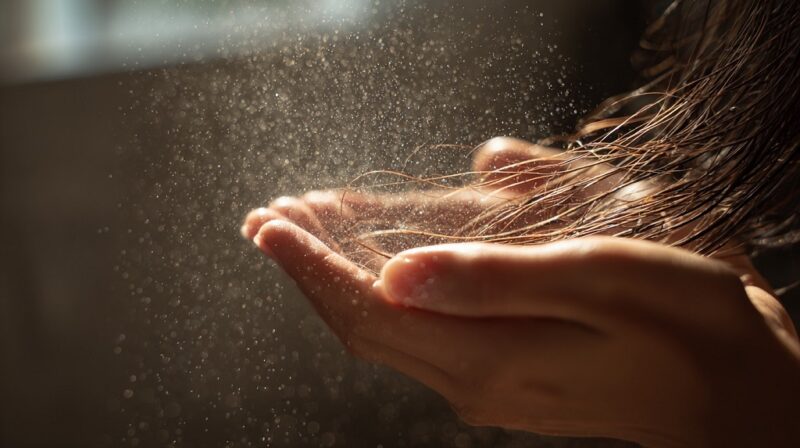
Simple at-home methods help identify the level through observation and touch rather than tools or professional testing. Accurate results depend on clean, product-free hair so that residue does not interfere with moisture behavior.
The float test uses water to observe how a single strand reacts over time. Hair gets placed gently into a clear glass of room-temperature water and allowed to sit briefly:
- Strand floating is low due to compact cuticles resisting water entry.
- Strand sinking is high because open cuticles allow water to enter quickly.
The spray test focuses on surface reaction rather than submersion. Dry hair receives a light mist of water, making moisture behavior easy to observe.
Beading on the surface points to low porosity, while rapid absorption points to high porosity. Moderate absorption with minimal beading often signals medium porosity.
The slide test relies on texture instead of moisture. Fingers move upward along a single strand toward the scalp, allowing the cuticle condition to be felt directly.
Smooth texture aligns with low porosity, while rough or bumpy texture aligns with high porosity. Slight texture paired with smoothness often reflects medium porosity.
Combining results across tests gives a clearer picture than relying on one method alone.
Signs and Symptoms
The type creates consistent patterns during everyday hair care that become noticeable over time.
Low often shows visible surface resistance and buildup during washing and styling.
- Water remains on the exterior of strands instead of soaking in.
- Products accumulate quickly, especially heavy creams and oils.
- Hair appears shiny but resists hydration and feels dry underneath.
High shows an ongoing moisture imbalance that affects strength, texture, and appearance.
- Dryness persists even after conditioning treatments.
- Frizz forms quickly, especially in humid environments.
- Breakage and split ends appear more often due to weakened cuticle structure.
Recognizing these signs supports better care choices and reduces trial-and-error in product selection.
Summary
Low porosity hair and high porosity hair differ due to opposite cuticle behaviors that shape moisture and protein needs.
Low responds best to routines that support penetration without buildup. On the other side, high benefits from approaches that slow moisture loss and reinforce weakened cuticles.
Clear test methods and observable signs simplify porosity identification and reduce guesswork.
Protein balance plays a critical role in maintaining strength without causing stiffness or breakage. Care routines aligned with porosity level promote healthier texture, improved manageability, and more predictable results over time.